
The Barcaccia at a glance
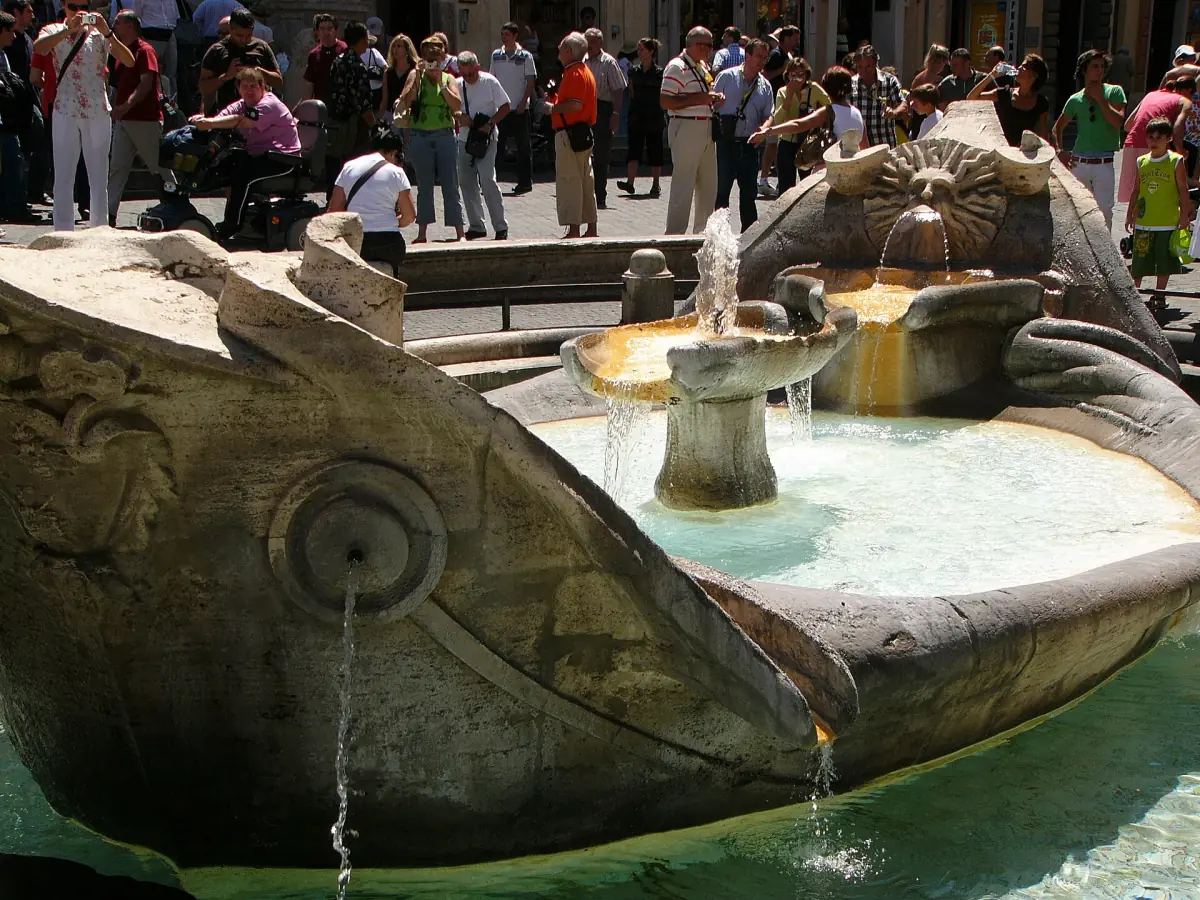
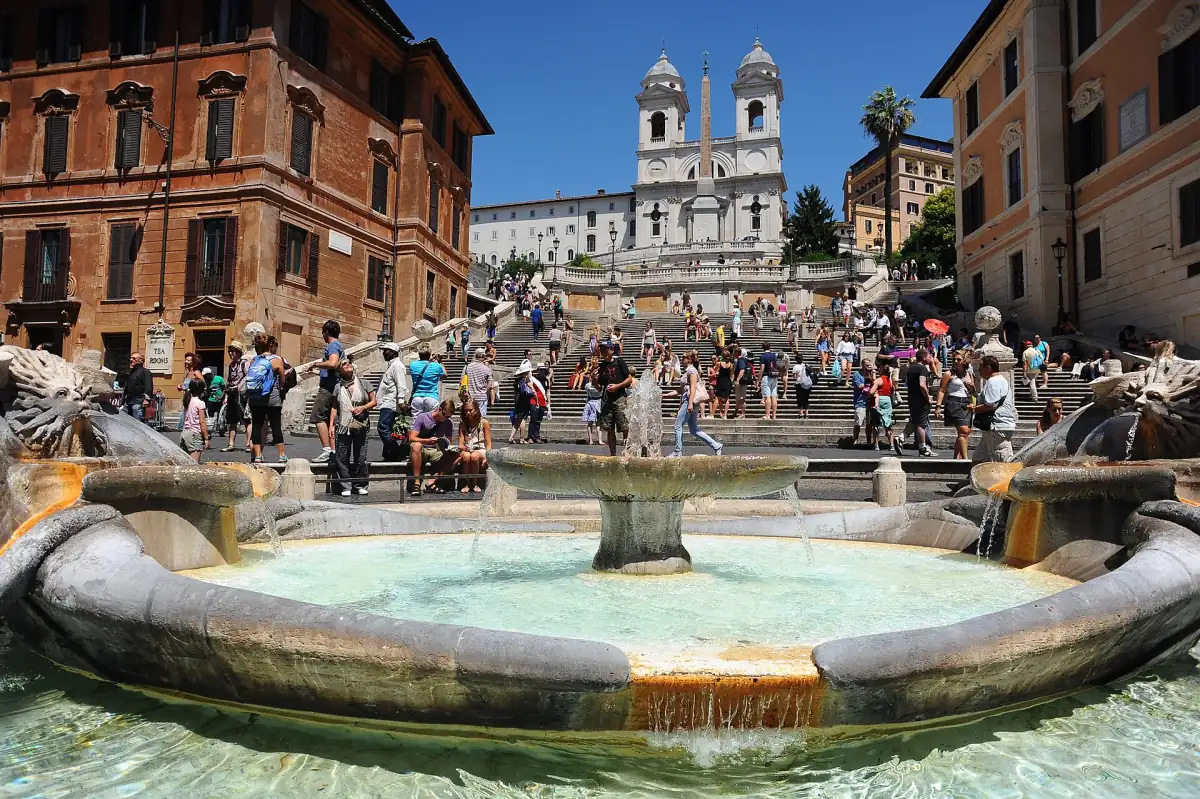
The Barcaccia is a fountain in the shape of a half-sunken boat. It stands in the lower part of Piazza di Spagna, directly in front of the Spanish Steps. The basin is low and wide, with shallow sides, and the bow and the stern look alike. Papal coats of arms with bees decorate the hull. It dates to 1626 to 1629, and Pietro Bernini is named as the sculptor, with a possible role for his son Gian Lorenzo.
The fountain sits well below street level for a practical reason. The water comes from the Acqua Vergine, whose pressure at this point was too low for a tall jet. A sunken boat solved the problem, because the water only had to fill and overflow.
Who made the Barcaccia, and when
Guidebooks often credit Gian Lorenzo Bernini alone. The attribution is less simple.
The dates
The usual dating is 1626 to 1629. Some accounts give 1627 to 1629. Use "around 1627" or "late 1620s" if you want a safe phrase.
The sculptor
Pietro Bernini is named as the main author, with a possible contribution by his son Gian Lorenzo. Gian Lorenzo's role is described in different ways, from helper to co-designer, so a sign that says "by Bernini" without a first name leaves out part of the story.
The client
The fountain was commissioned by Pope Urban VIII. The coats of arms on the hull show bees.
The boat
The Tiber floods are one possible inspiration for a boat on dry land. A specific barge that was left behind on this spot is a popular story and not an established cause.
Walks that pass the Barcaccia
Guided walks around the Spanish Steps, Trevi and the old centre, with live prices and availability.
Rules at the fountain
Rome's police regulation of 2019 bans bathing in historic fountains and using them for anything other than looking. Do not climb in, dip your feet or sit on the rim. The regulation also covers sitting down with food or drink on monuments, so the fountain is not a picnic spot. The rules for the Spanish Steps themselves are on the sitting rules page.
The water is a different matter. The Barcaccia is listed among Rome's artistic fountains with drinking water. That refers to the water that runs in. It does not mean the basin is clean enough to drink from or that you may step inside.
Damage and restoration
In February 2015, football fans from the Netherlands damaged the fountain during riots. That damage does not describe the fountain today. The latest restoration was completed on 16 April 2025 and included cleaning and conservation work on the travertine and the metal parts. The sum named in the announcement covers several fountains, so it is not the cost of the Barcaccia alone.
Old posts about scaffolding or fences around the fountain describe earlier work. If a barrier is up when you arrive, it is a short-term measure, and the fountain can be seen from the steps above anyway.
How to see it
Three angles, none of them complicated.
From the square
Stand at the edge of the piazza and walk once around the basin. From here you see the low hull, the coats of arms and the water spilling over the sides. The Spanish Steps rise behind it.
From the steps
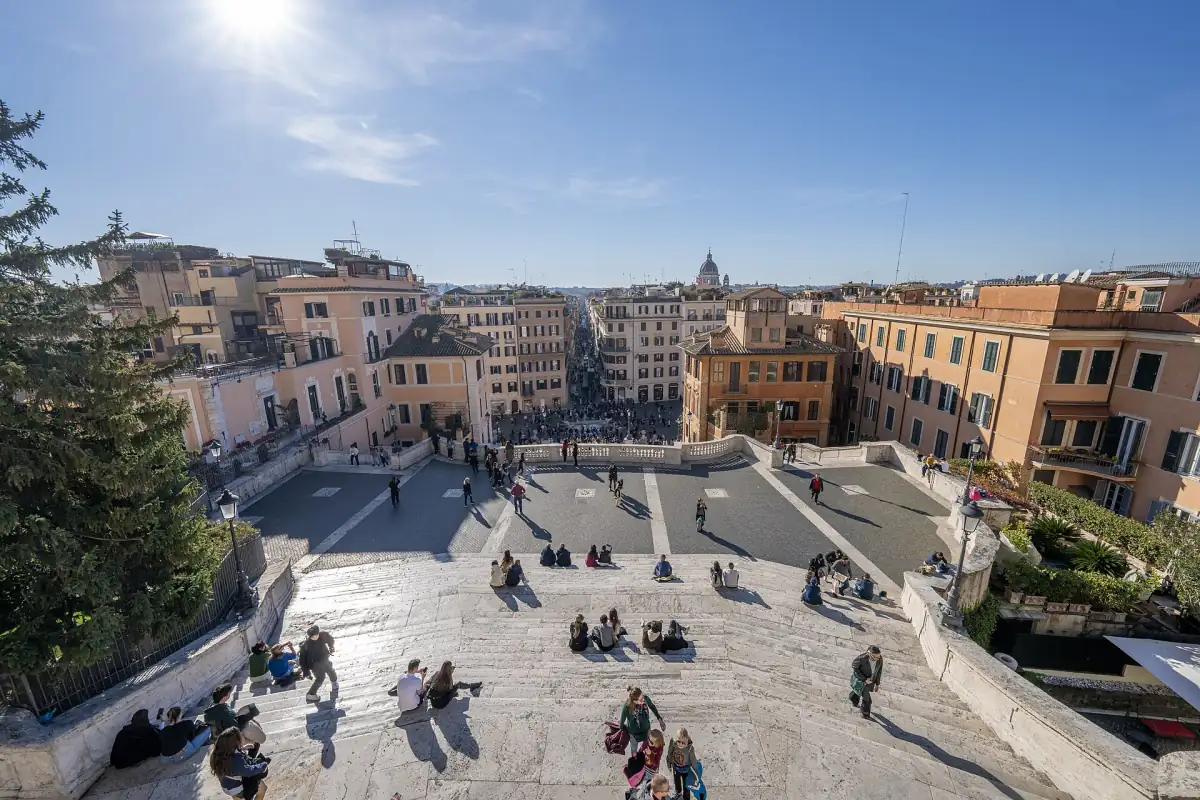
Climb a few runs and look down. The fountain looks like a small boat moored at the foot of the staircase, and the whole square comes into view.
In the evening
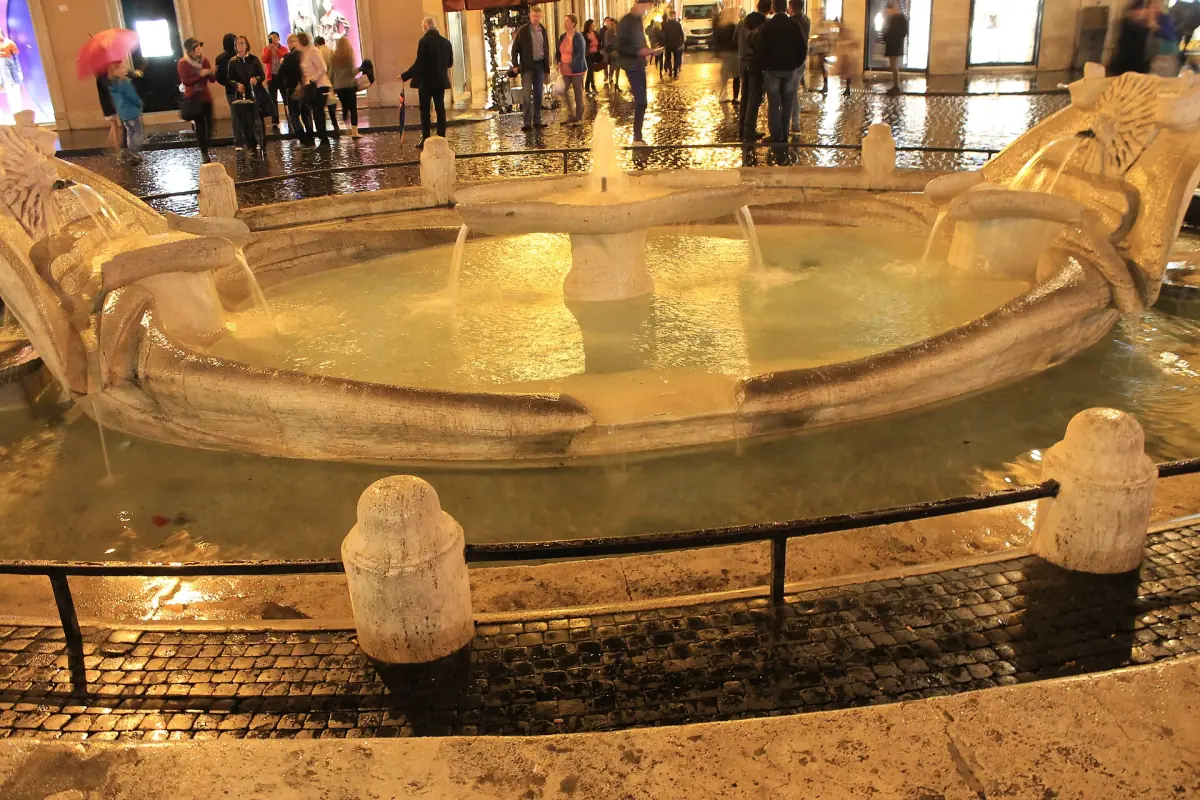
The lighting changes the look of the stone, and the square is calmer than at midday. Evening is also a good moment to continue to the Trevi Fountain on foot.
Seen from the square, Keats' former apartment is on the right at the foot of the steps and Babington's is on the left. The upper square, Piazza della Trinità dei Monti, lies above the staircase and is described on its own page.
Continue your walk
Everything on this side of the square is within a few minutes.
Piazza di Spagna
The square around the fountain and why it carries that name.
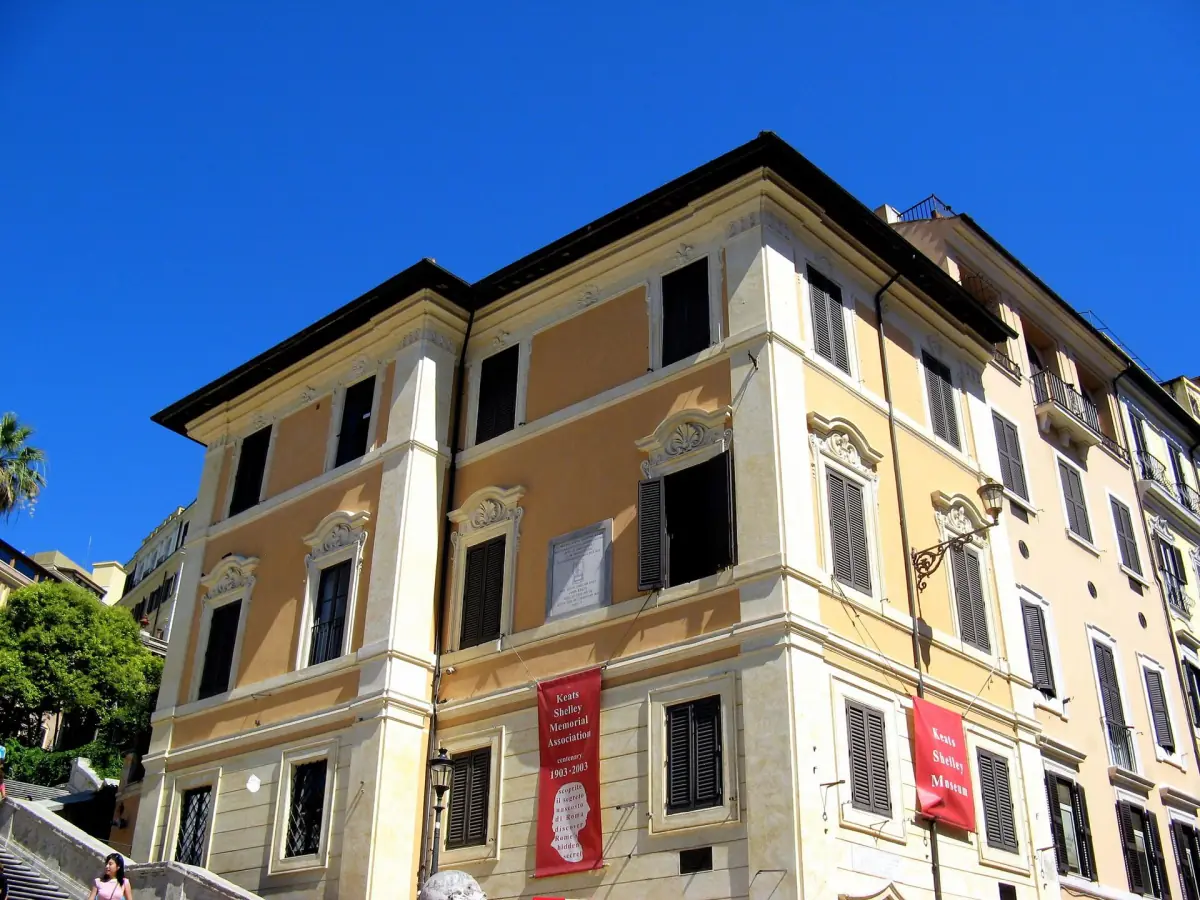
Keats-Shelley House
The apartment beside the steps, with hours and prices.
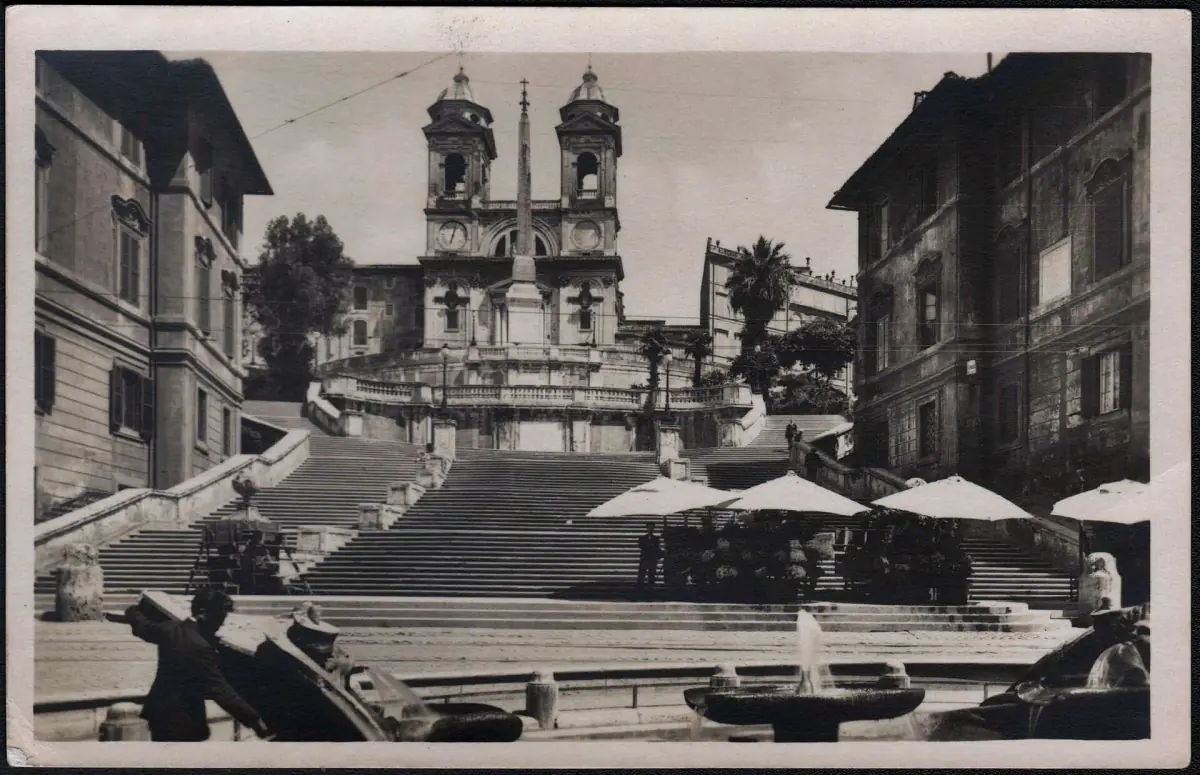
History of the steps
Who built the staircase and when.
For the rest of the city, including the Colosseum, start with Rome in one day.
Barcaccia fountain: frequently asked questions
Who built the Barcaccia fountain?
Pietro Bernini is named as the main author, with a possible contribution by his son Gian Lorenzo Bernini. The fountain was commissioned by Pope Urban VIII and dates to about 1626 to 1629.
Why is the Barcaccia so low?
The water pressure of the Acqua Vergine was too weak at this point for a tall jet. A fountain set low and shaped like a sinking boat works with a gentle overflow.
Can you drink the water or touch it?
The Barcaccia is listed among Rome's fountains with drinking water, which refers to the water flowing in. Do not climb into the basin or bathe; Rome bans that in historic fountains.
Is the fountain free to visit?
It stands in an open square, and no ticket is needed to look at it. The steps have no entry fee either.
When was the Barcaccia last restored?
The latest restoration was completed on 16 April 2025 with cleaning and conservation work on the travertine and the metal.
What is the best time to photograph it?
Early in the morning the square is calmer, and in the evening the fountain is lit. At midday expect crowds on the steps behind it.